← Journal
采购AI

招标响应自动化:如何将投标准备从数周缩短至数小时 [2026指南]

2026年5月11日

如果您的团队仍在手动准备医疗器械招标——将规格参数复制到电子表格中、在共享文件夹里追踪产品数据表、逐行审核合规要求——那么您花费的时间是实际所需的10倍。招标响应自动化是2026年采购团队手中最大的效率杠杆。

招标响应自动化的真正含义

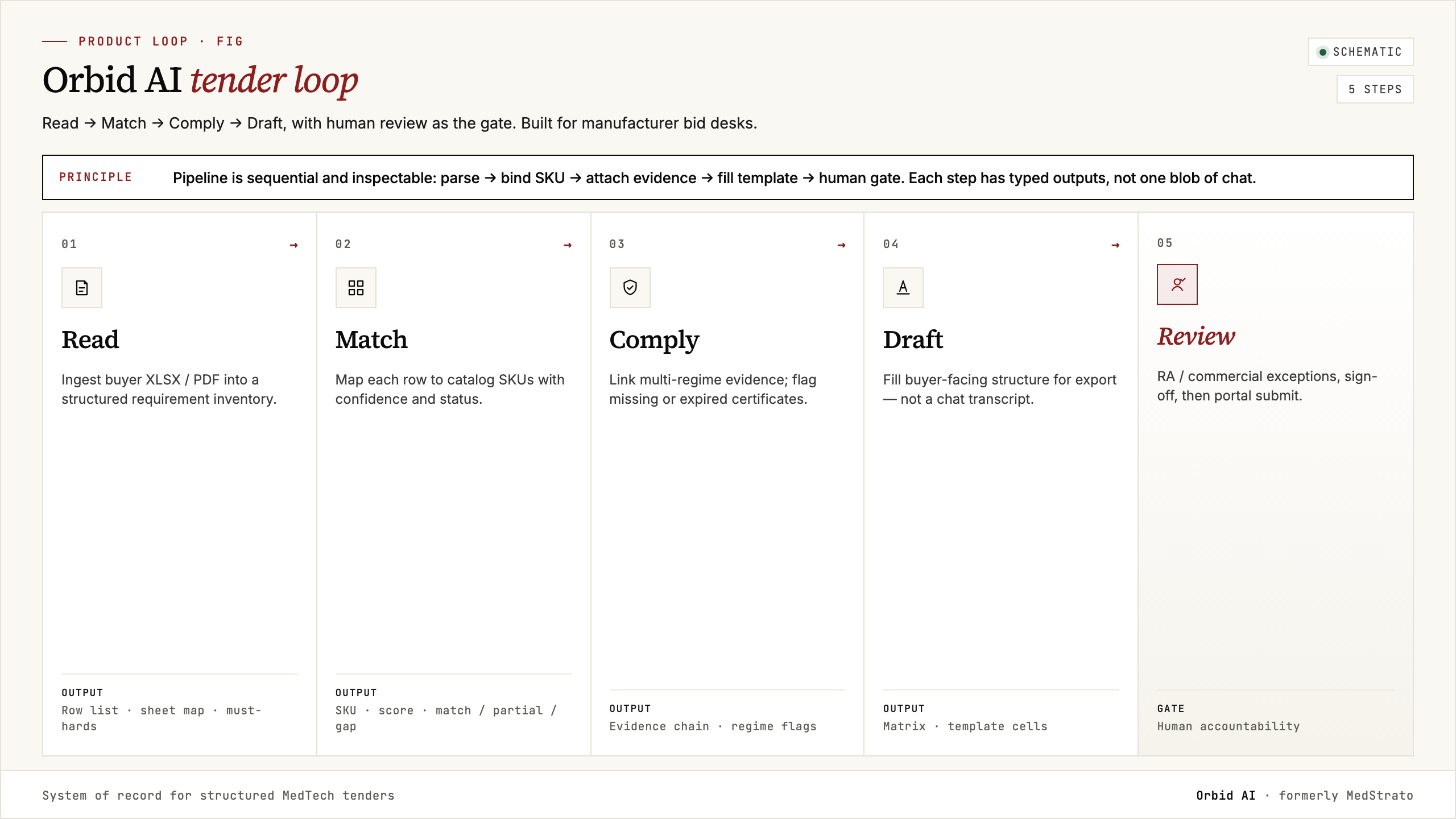
招标响应自动化用AI驱动的工作流替代手动且容易出错的投标准备步骤。它的核心不是生成文本,而是匹配规格参数、验证合规性,并以机器速度组装证据材料。

以下五个步骤实现了自动化:

  1. 需求提取——将招标文件(PDF、Excel、Word)解析为结构化的逐行条目
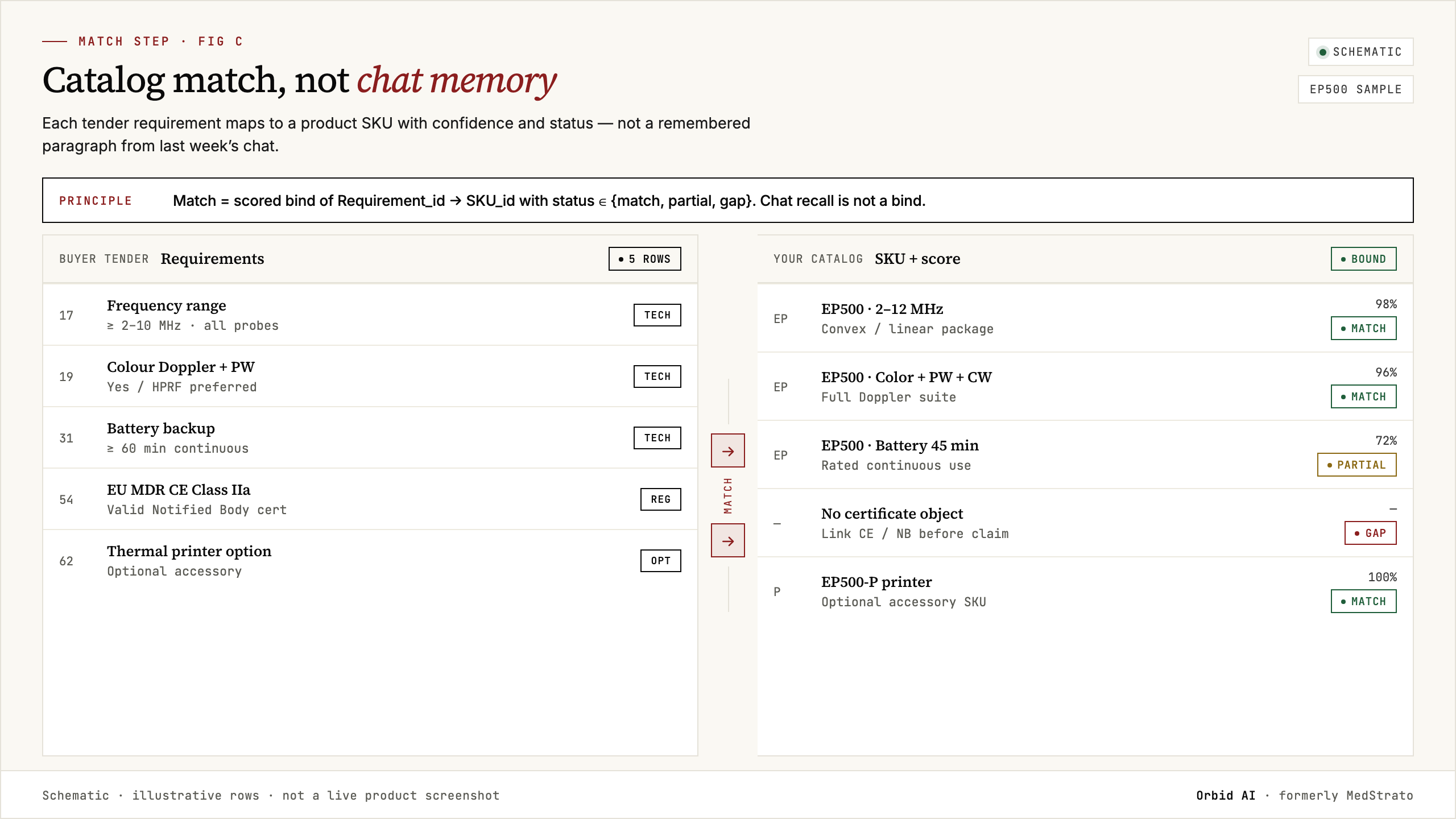
  2. 规格匹配——将每项需求映射到您的产品目录,并附带置信度评分
  3. 合规验证——检查每个匹配产品的法规状态(FDA许可、CE标志等)
  4. 证据收集——从您的文档库中提取产品数据表、证书和检测报告
  5. 文档组装——按照招标要求的格式编排最终提交文件

人工 vs. 自动化:数据对比

以下是一份典型的150行医疗器械招标文件的处理情况:

阶段人工处理自动化处理
需求提取4–6小时< 1分钟
规格匹配12–18小时46秒
合规检查6–8小时2–3分钟
证据收集8–12小时5–10分钟
人工审核与战略决策4–6小时4–6小时
总计34–50小时4–6小时

人工审核环节保持不变——自动化消除的不是判断力,而是重复性劳动。

为什么通用RFP工具不适用于医疗器械

Loopio、Responsive、RFPIO等工具是为IT和专业服务RFP设计的,它们依赖内容库和关键词匹配。医疗器械招标需要根本不同的能力:

  • 法规感知——您的产品是否持有符合该特定需求的正确FDA 510(k)许可或CE标志?
  • 规格级精度——招标要求"流速0.1–999 mL/hr",您的产品支持0.1–1200 mL/hr。关键词匹配会遗漏这一点;规格匹配则能准确识别。
  • 证据链——每项声明都需要可追溯的来源:产品数据表第4页、证书编号X、检测报告Y章节。通用工具无法构建证据链。
  • 多法规体系合规——单份招标可能同时涉及FDA、ISO 13485、IEC 60601及当地注册要求。

选择招标自动化平台的评估要素

并非所有自动化工具都一样。请按以下标准评估:

  1. 准确性——误报率是多少?(业界最佳:<0.5%)。要求提供基于真实招标而非演示数据的基准测试。
  2. 法规覆盖——支持多少种法规体系?至少需要FDA、EU MDR以及您的主要市场。
  3. 文档解析——能否处理格式不规范的PDF、扫描文件和非标准招标格式?
  4. 系统集成——能否与您现有的产品目录、文档管理系统和ERP对接?
  5. 审计追踪——能否将每个匹配的规格参数追溯到源文档?这对中标后审计至关重要。
  6. 安全性——SOC 2 Type II、加密和数据驻留对医疗器械企业来说是不可妥协的底线。

实施路线图

中型医疗器械企业的典型部署时间表:

  • 第1–2周:用2–3份历史招标进行试点,校准匹配精度
  • 第3–4周:产品目录和文档库集成
  • 第5–8周:在新招标上线部署,同步进行人工验证
  • 第3个月起:全面投产使用,仅对边缘案例进行人工验证

大多数团队在试点阶段即可实现正向投资回报。完整的ROI计算框架请参阅我们的采购团队指南。

核心结论

2026年,招标响应自动化已不是可选项——它是具有竞争力的医疗器械采购团队的基本门槛。实现自动化的团队能以相同的人力响应3–5倍的招标、中标率提高15%–25%,并将工程师从复制粘贴式的合规工作中解放出来,投入到战略性工作中。

用您自己的招标来体验——带上一份真实投标参加30分钟演示。

常见问题

招标响应自动化:如何将投标准备从数周缩短至数小时 [2026指南]

What is tender response automation?

Tender response automation uses AI and software tools to handle the repetitive, time-consuming parts of responding to procurement tenders — requirement extraction, specification matching, compliance verification, evidence gathering, and document assembly. Instead of spending 32–48 hours per bid manually, automated workflows compress this to 4–6 hours of review and strategic input.

How much time does tender automation actually save?

Teams using purpose-built tender automation tools report 80–90% reduction in bid preparation time. A 162-row medical device tender that takes 40 hours manually can be processed in under 46 seconds for the matching phase, with total human review taking 4–6 hours. For teams handling 10+ tenders per month, this translates to 300–400 recovered person-hours.

What's the difference between generic RFP tools and medical device tender automation?

Generic RFP tools (Loopio, Responsive, RFPIO) use content libraries and keyword matching. Medical device tender automation adds regulatory awareness (FDA 510(k), EU MDR, NMPA), spec-level matching against product datasheets, compliance audit against 14+ regulatory regimes, and evidence chains that link every claim to a source document. Generic tools can't verify that your Class III device holds the right clearance for a specific tender requirement.

Can tender automation handle multiple languages and regulatory regimes?

Yes. Modern platforms support tenders across APAC, EMEA, and Americas markets, parsing requirements in multiple languages and cross-referencing against the relevant regulatory framework — FDA for the US, EU MDR for Europe, TGA for Australia, NMPA for China, HSA for Singapore, and more.

What ROI can procurement teams expect from tender automation?

Typical ROI is 10–30× the annual software cost. For a mid-size medical device distributor: $428K in annual labor savings, 15–25% higher win rate from fewer errors, and 3–5× increase in tender capacity. The tool pays for itself within 1–2 months for most teams.

相关文章

你的下一个标书
周五截止。

带五十个行项目。带走一份可提交的文件。

申请访问联系创始人